

Category: Posts

Posts

Dictators in History: The Path to Power!

Dictators
Nazi
  • We are a nation of disillusioned, misguided, and easily manipulated individuals, regardless of nationality, race, gender, or background. Instead of considering the situation from multiple perspectives, you point fingers and fail to grasp the broader context.

For instance, you disregard the president’s history of questionable business tactics. His guilty verdict in New York, sexual harassment of women…  E. Jean Carroll v. Donald J. Trump case involves two related lawsuits where Carroll accused Trump of sexual assault. A jury found that Trump sexually abused Carroll in a department store in 1996 and awarded her $5 million for battery and defamation.

The jury concluded that Trump defamed Carroll in his statements in 2022, and the total damages awarded to Carroll across both cases amounted to $88.3 million. The cases are currently under appeal, which shows how he refuses to accept blame for anything he has done.

Yet here we are with a president who has a history of taking advantage of business owners he hired and refusing to pay them. And here we are, witnessing the president’s loyal cabinet slowly transforming this country into an autocratic nation at his request.

Let’s be clear, throughout history, dictators have emerged across different continents, often leaving an indelible mark on their nations and the world.

This blog post explores how some of the most notorious dictators came into power, analyzing the circumstances and tactics they used to seize control.

1. Adolf Hitler – Germany

Rise to Power: The Treaty of Versailles and the economic turmoil of the Weimar Republic created fertile ground for radical ideologies. Hitler joined the National Socialist German Workers’ Party (NSDAP) and quickly rose through the ranks, using charismatic oratory propaganda and promises of national rejuvenation.

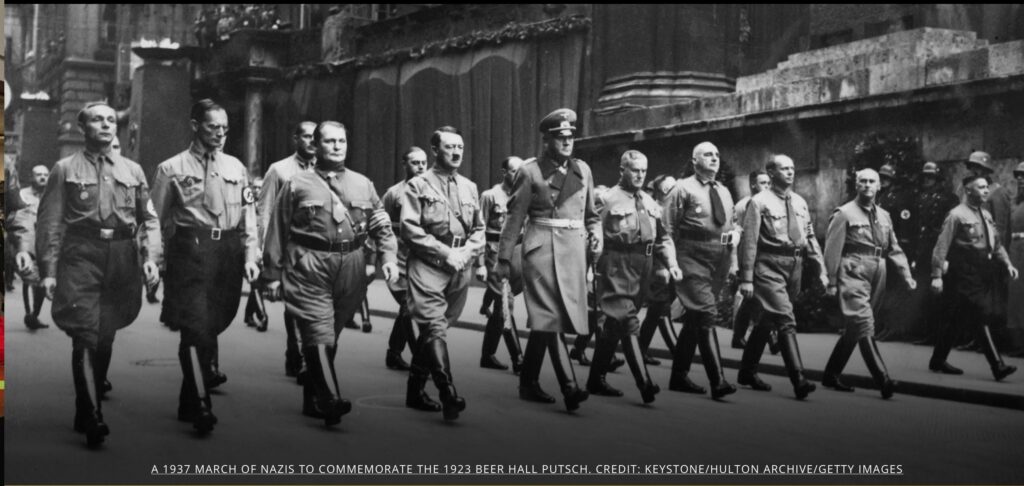
The failed Beer Hall Putsch of 1923 landed him in prison, where he wrote “Mein Kampf.” 1933, he established a totalitarian regime by leveraging the Reichstag Fire and Enabling Act.

2. Joseph Stalin – Soviet Union

Rise to Power: After the Russian Revolution of 1917 and the subsequent civil war, Stalin maneuvered through the ranks of the Bolshevik Party.

Stalin consolidated power by outmaneuvering political rivals like Trotsky and using his position as General Secretary. Through purges, show trials, and a cult of personality, he transformed the Soviet Union into a dictatorship by the late 1920s.

3. Benito Mussolini – Italy

Rise to Power: Post-World War I, economic hardships, and social unrest set the stage for Mussolini’s ascent. He founded the Fascist Party in 1919 and capitalized on nationalist sentiments.

Mussolini’s Blackshirts conducted violent campaigns against opponents, and the 1922 March on Rome pressured King Victor Emmanuel III to appoint him as Prime Minister.

Mussolini gradually dismantled democratic institutions, establishing a fascist dictatorship.

4. Mao Zedong – China

Rise to Power: During the Chinese Civil War, Mao Zedong emerged as a prominent leader within the Communist Party. His innovative strategies, including guerrilla warfare and land reforms, garnered substantial support from the peasantry.

Following his triumphant victory over the Nationalists in 1949, Mao established the People’s Republic of China. He consolidated his power through political campaigns, notably the Great Leap Forward and the Cultural Revolution.

5. Kim Il-sung – North Korea

Rise to Power Following Korea’s liberation from Japanese rule in 1945, Kim Il-sung gained support from the Soviet Union. He became the Premier of North Korea and utilized propaganda, purges, and the Korean War to solidify his rule. His regime established a dynastic dictatorship that persists to this day, with power passing to his son and grandson.

Conclusion

The rise of dictators often involves a combination of charismatic leadership, exploitation of socio-political instability, and strategic use of violence and propaganda.

You’d better think, watch, and understand how dictators plot to gain power. This can help us recognize and counteract the warning signs of authoritarianism in the modern world. Project 2025 is the playbook, especially right now.

The Power of Our Words: Choosing to Build or Destroy!

The power of words
This is me in deep thought!

We’ve all experienced it: voicing frustrations about traffic, complaining about co-workers, or feeling let down by a missed chance. Whether you know it or not, complaining is as inherent as breathing and can often serve as a release.

However, as the proverb states, “Complaining is like a rocking chair. It gives you something to do but doesn’t take you anywhere.” All it does is generate anxiety and stress for those around you.

My purpose in weaving together my stories isn’t to create a platform for endless complaints. Instead, I view venting as a pivotal moment, an opportunity to confront our emotions and emerge as individuals who have grown and evolved.

We as humans are BROKEN!

Each story I share is a stepping stone toward clarity, encouraging reflection rather than merely expressing dissatisfaction.

For instance, we can either wield our words as weapons of destruction or use them to create connections and encourage positive change. This choice leads to personal growth and a sense of empowerment when made consistently.

It’s all about choices, and I’ve made mine clear: I choose to build bridges and foster positive change in the world around us—especially right now! In the 2024 election, you voiced dissatisfaction with the Biden administration’s policies. I understand that you felt disappointed with specific outcomes, partly because you believed he wasn’t doing anything to help you.

So, you listened to words of destruction that compounded what you believed to be accurate and what you saw each time you went shopping for food.

You wanted relief…so you followed the negativity. What did you get from the promises made for your vote?

Hell on earth, I would say!

The Destructive Nature of Complaining

It’s essential to recognize that complaining can be a double-edged sword. Which can be seen as…

  • On one hand, it allows us to vent and express our frustrations.
  • Conversely, it can also lead to a cycle of negativity that impacts our well-being and the morale of those around us.

Look at the chaos your vote has created around the world. People, we are in for a bumpy ride. We are hated even more now and possibly unwelcome in other countries.

The bottom line is when we constantly complain without seeking solutions, we risk:

  1. Spreading negativity: Our words have the power to influence others, and persistent complaining can create a toxic environment.
  2. Undermining relationships: Complaints directed at others can erode trust and damage personal and professional relationships.
  3. Stagnating progress: Focusing on problems without seeking solutions can prevent you from moving forward and finding resolutions.

The Constructive Choice: Building Bridges and Positive Change!

Conversely, we can harness the energy behind our complaints and channel it into something productive. By choosing to approach our grievances constructively, we can:

  • Fostering empathy and understanding can help us connect with others more profoundly, fostering a sense of unity and compassion.
  • Encourage positive change: Complaints can lead to meaningful improvements and solutions when framed as constructive feedback.
  • Promote a positive environment: By focusing on solutions and maintaining a positive outlook, we can create a supportive and uplifting atmosphere.

    The power of words
    Be at peace with yourself!

In the grand scheme of things, we are profoundly shaped by the environment we grow up in, influenced by the lessons we learn as children. My own experiences resonate with this truth. Though my parents were physically present in our home, they often felt emotionally absent during our times of need, leaving us to navigate life‘s challenges independently.

Some of my siblings, like my brother David, struggled to break free from the shadows of our troubled upbringing. Recently, he passed away, leaving behind a poignant silence that speaks volumes about the life he lived. When he departed from this world, he did so alone, and we are left in anguish, wondering how long he had lain there, unseen and unheard, before being discovered.

David carried the weight of unresolved issues from our childhood and beyond, deep-seated wounds that festered over time. These struggles were not just personal; they were destructive forces that ultimately defined his journey. The impact of our past can be potent, shaping our paths in ways we often fail to understand until it’s too late.

In any case, our choices are solely our own and no one else’s. Here are some strategies I’ve discovered over the years to combat negativity.

Practical Steps to Turn Complaints into Positive Actions

1. Think before you speak: Consider whether your complaint is constructive or harmful. Try to find words that will encourage communication and problem-solving?

2. Use “I” statements: Instead of blaming others, express your feelings and concerns using “I” statements. For example, “I feel frustrated when…” rather than “You always…”

3. Presenting viable solutions involves articulating our concerns and actively addressing the issues. This approach creates a profound sense of empowerment. It encourages a proactive mindset, allowing us to transform challenges into opportunities for positive change.

4. Practice gratitude: I establish a foundation of gratitude by acknowledging the positive aspects of my life. This helps me to balance focus on positivity rather than negativity.

In conclusion,

It all comes down to this: complaining is a natural part of the human experience, but it doesn’t have to be a dead-end road.

Nevertheless, when we use our words constructively, we change the narrative. Our complaints become catalysts for positive change, bridge gaps, and create a more harmonious and uplifting environment for ourselves and those around us.

Simply put, the power is in our hands—or, more accurately, in our words.

The power of words
A journey of a thousand miles begins with a single step

This JusMee Talkin

Navigating the Nonsense: When It’s Just Too Much!

Introduction

Navigating the nonsense

Navigating the nonsense…Feeling overwhelmed by the constant flood of information and noise in today’s world is not uncommon. From social media updates to news alerts, navigating through the nonstop stream of content that bombards us daily can be challenging. 

Whether managing your email inbox or sorting through social media posts, we’ve got you covered. We’ll provide practical tips and strategies to help you filter out the noise and focus on what truly matters. 

In this age of information overload, it’s essential to develop effective strategies to weed out the irrelevant and focus on what’s important to you. 

So sit back, relax, and get ready to navigate through the noise. Say goodbye to the overwhelming clutter and hello to a more peaceful and purposeful existence.

Understanding Information Overload

This constant barrage of information can lead to what is known as information overload, where we are exposed to more information than we can effectively process and make sense of.

Information overload can have detrimental effects on our mental health and overall well-being. It can lead to increased stress, anxiety, and feelings of overwhelm. 

The constant need to keep up with the latest news or trends can leave us exhausted and drained. It’s essential to recognize the signs of information overload and take steps to manage it effectively.

Effects of Information Overload on Mental Health

Information overload can affect our mental health, leading to various adverse effects. One of the most significant impacts is increased stress levels. 

Moreover, information overload can also lead to decreased productivity. Focusing on the tasks at hand can be challenging with so much information vying for our attention.

 We may find ourselves constantly distracted, jumping from one piece of information to another without making meaningful progress.

Another consequence of information overload is decision fatigue. When we’re exposed to an excessive amount of information, it becomes harder to make informed decisions. 

We may be paralyzed by choice, unable to sift through the noise to find the most relevant and vital information.

Recognizing Signs of Overwhelm


Navigating the nonsense

Before effectively managing information overload, it’s crucial to recognize the signs of overwhelm. The following are some common indicators that you may be experiencing information overload:

  1. Difficulty focusing: If you find yourself constantly distracted or unable to concentrate on a task, it could be a sign that you’re overwhelmed by the amount of information you’re trying to process.
  2. Feeling anxious or stressed: If you feel a constant sense of anxiety or stress when confronted with the influx of information, it’s a clear sign that you may be experiencing information overload.
  3. Procrastination: If you constantly put off tasks or feel overwhelmed at the thought of starting something new, it may result from information overload.
  4. Physical symptoms: Information overload can manifest in headaches, fatigue, or insomnia. Pay attention to your body’s signals and take breaks when needed.
  5. Decreased productivity: If you notice a decrease in your productivity levels or a lack of motivation, it could be a sign that you’re struggling to manage the amount of information you consume.

Recognizing these signs is the first step towards regaining control and finding a sense of calm amidst the chaos.

Strategies to Manage Information Overload

Now that we understand the impact of information overload and how it can affect our mental health let’s explore some strategies to manage it effectively. Implementing these techniques allows you to filter out the noise and focus on what truly matters.

Setting Boundaries and Managing Expectations

One of the first steps in managing information overload is setting boundaries and managing your expectations. Establishing clear guidelines for how much time and energy you’re willing to devote to consuming information is essential. This may involve setting specific times for checking emails or social media and sticking to those boundaries.

Additionally, it’s crucial to manage your expectations regarding the amount of information you can realistically process. Accept that you can’t stay on top of every news story or social media trend, and focus on what’s most important to you. 

By setting realistic expectations, you’ll be able to alleviate some of the pressure and reduce feelings of overwhelm.

Prioritizing and Filtering Information

Another effective strategy for managing information overload is prioritizing and filtering the information you consume. Start by identifying your priorities and the areas of your life that are most important to you. This could be your work, personal relationships, or hobbies.

Once you’ve identified your priorities, you can filter out the information that is not relevant to those areas. Unsubscribe from unnecessary email newsletters, mute or unfollow social media accounts that don’t align with your interests, and use filters or keyword alerts to streamline the information you receive.

By prioritizing and filtering information, you’ll be able to focus on what truly matters to you rather than getting caught up in the never-ending stream of irrelevant content.

Practicing Digital Detox and Mindfulness

In a constantly connected world, taking regular breaks from technology and practicing mindfulness is essential. Schedule dedicated time for digital detoxes, where you disconnect from your devices and engage in activities that bring you joy and relaxation.

During these breaks, focus on being present in the moment and cultivating mindfulness. 

Tools and Resources to Help Navigate Information Overload

Fortunately, numerous tools and resources help you navigate information overload. Here are a few worth exploring:

  1. Email management tools: Tools like “Unroll.me” can help you unsubscribe from unwanted email newsletters and consolidate the ones you want to keep into a single daily digest.
  2. Social media management apps: Apps like “Hootsuite” or “Buffer” allow you to schedule and manage your social media posts, reducing the time spent scrolling through endless feeds.
  3. News aggregators: Instead of visiting multiple news websites, consider using news aggregator apps like “Feedly” or “Flipboard” to customize your news feed and get updates from your favorite sources in one place.
  4. Productivity apps: Apps like “Trello” or “Todoist” can help you organize and prioritize your tasks, ensuring that you stay focused on what needs to be done without getting overwhelmed.
  5. Meditation and mindfulness apps: Apps like “Headspace” or “Calm” offer guided meditations and mindfulness exercises to help reduce stress and improve focus.

These are just a few examples; countless other tools and resources are available. Experiment with different options and find what works best for you.

Conclusion: Finding Balance in a Chaotic World

Finding balance is essential for our well-being in a world of constant noise and information overload. By understanding the impact of information overload on our mental health and implementing strategies to manage it effectively, we can regain control of our time and attention.

Remember, it’s okay to step back, take a deep breath, and focus on what truly matters to you. By doing so, you’ll be able to lead a more purposeful and fulfilling life in this age of information overload. 

So embrace the journey, embrace the challenges, and create a life free from the overwhelming clutter and full of peace and purpose.

Thanks for Reading!

Stop injustice. Inscription of nigerian protest slogan.

The significance of Fourth of July for Black and Brown People!

Celebratory fireworks.

 The Fourth of July is today, and many Americans eagerly anticipate fireworks, barbecues, and parades to celebrate the nation’s independence. 

However, this holiday holds a deeper and more complex meaning for black and brown people. It is a time to reflect on our communities’ struggles, resilience, and contributions throughout history. 

While we acknowledge the progress made since the signing of the Declaration of Independence, it is crucial to examine the historical context and challenge the narrative surrounding this holiday.

Historical context: The complexities of celebrating Independence Day

The Fourth of July marks the day the United States declared independence from British rule in 1776. However, for black and brown people, this celebration is intertwined with a painful history of Slavery, oppression, and systemic racism. 

While the Declaration of Independence proclaimed that “all men are created equal,” it is essential to recognize that this equality was not extended to black people who were enslaved at the time. 

This stark contrast between the ideals of freedom and equality and the reality faced by black and brown communities is a significant aspect to consider when reflecting on the Fourth of July.

Challenging the Narrative: Examining the founding fathers and their views on Slavery

It is important to delve into the beliefs and actions of the founding fathers when discussing the Fourth of July from a black perspective. 

While some of these figures, such as Thomas Jefferson, are revered for their contributions to American history, it is crucial to acknowledge their contradictory stances on Slavery. 

Despite espousing ideals of liberty and justice, many of the founding fathers were slave owners themselves. This contradiction forces us to confront the complexities of celebrating a holiday built upon enslaved people’s backs.

Reflecting on injustice: The ongoing struggles faced by Black and Brown communities

While progress has been made since the signing of the Declaration of Independence, Black and Brown communities continue to face systemic injustices. 

From racial profiling and police brutality to economic disparities and educational inequities, the fight for equality is far from over. 

Reflecting on the Fourth of July allows us to acknowledge these ongoing struggles and reminds us of the work that still needs to be done to achieve true freedom and justice for all.

Celebrating resilience: Highlighting the accomplishments and contributions of black and brown individuals

Amidst the challenges and injustices Black and Brown’s communities face, it is essential to celebrate the resilience and accomplishments of individuals within these communities.

 From influential civil rights leaders like Martin Luther King Jr. and Rosa Parks to trailblazing artists, scientists, and entrepreneurs, black and brown individuals have made significant contributions to American society. 

Recognizing and celebrating these achievements is integral to reflecting on the Fourth of July from a black perspective.

Reclaiming the Fourth of July: Suggestions for alternative ways to commemorate the holiday

While acknowledging the complexities and injustices associated with the Fourth of July, there are alternative ways to commemorate this holiday that align with a more inclusive and reflective perspective. 

Instead of solely focusing on traditional celebrations, consider engaging in activities that promote social justice and community empowerment. 

This could involve attending educational events, participating in peaceful protests, or supporting organizations that work towards racial equality. 

By reclaiming the Fourth of July in this manner, we can contribute to a more meaningful and transformative celebration.

Amplifying voices: Supporting Black-owned businesses and organizations

One powerful way to reflect on the Fourth of July from a black perspective is by amplifying the voices and supporting the economic empowerment of black and brown communities. 

Seek out and patronize black-owned businesses, whether local restaurants, boutiques, or service providers. Additionally, consider donating to and volunteering for organizations that work towards social justice and uplift black and brown communities. 

We can contribute to a more equitable and inclusive society by actively supporting these efforts.

Education and awareness: Resources for learning about Black history and Social justice issues

Education and awareness are fundamental in challenging the narrative surrounding the Fourth of July and understanding the experiences of black and brown people. 

Take the time to educate yourself about black history, social justice issues, and the ongoing fight for equality. Numerous resources, such as books, documentaries, podcasts, and online courses, can provide valuable insights and perspectives. 

By expanding our knowledge and understanding, we can become more informed advocates for change.

Moving forward: Taking action and advocating for change

From a black perspective, reflecting on the Fourth of July should not end with introspection. It should inspire us to take action and advocate for change. Engage in conversations about race and social justice within your communities and on a broader scale.

 Support policies and initiatives that address systemic racism and work towards creating a more just and inclusive society. 

By actively participating in the fight for equality, we can honor the struggles and aspirations of those who came before us.

Conclusion: Embracing a more inclusive and reflective Fourth of July celebration

Fourth of July is here today; from this day forward, let us embrace a celebration beyond fireworks and barbecues. Let us reflect on the significance of this holiday from a black perspective, acknowledging the complexities, injustices, and contributions of black and brown communities throughout history. 

We can work towards a more inclusive and reflective Fourth of July celebration by challenging the narrative, celebrating resilience, reclaiming the holiday, amplifying voices, and advocating for change. 

Together, we can strive for a future where true freedom and justice are realized for all. 

Like, comment, and subscribe to continue the conversation and support the ongoing fight for equality.

JUSMEE TALKIN

BLACK HISTORY

The Tragic Reality: America’s Ban On Black History!

 Black History Month
Children with teacher preparing for Black History Month

It is nothing new that America–a country founded on the principles of equality and justice–has a history of banning books. 

In fact, a quick Google search will reveal that this practice is alive and well in the 21st century. 

More often than not, banned books deal with difficult topics such as race, gender, and sexuality.

One would think there would be no need to ban books in a country where library shelves are lined with books on these topics. However, the reality is that these books are often banned to silence voices that need to be heard.

This blog will explore the tragic reality of America’s ban on black history and its impact on the country.

The long, sad history of America’s ban on black history

Black History Month at school

In the early 1800s, America was a young nation struggling to find its identity. One of the things that made America unique was its diversity. 

People from all over the world had come to America in search of a better life. This included people of African descent who were forcibly brought to America as slaves. ‘

Despite the contributions of black Americans to the country, they were treated as second-class citizens. They were denied basic rights and were subjected to racial discrimination. 

This was especially true during the Jim Crow era when black Americans were discriminated against in every aspect of life.

It wasn’t until the Civil Rights Movement in the 1950s and 1960s that black Americans began to gain some of the rights they deserved. 

Even so, black America continues to face challenges today. Racism is still a problem in America, and black Americans are still disproportionately affected by it.

 In 2018, black Americans were 3.5 times more likely than white Americans to be killed by police. And black Americans are twice as likely as white Americans to be unemployed.

Many factors contribute to these disparities, including a lack of access to education and resources, discrimination in the workplace, and a history of racism and discrimination. 

But the fact remains that racism is still a very real problem in America, and black Americans are still bearing the brunt of it.

Racism is still a problem in America, and black Americans are still disproportionately affected by it. Despite the progress made in recent years, racism is still a very real problem in our country. African Americans are still more likely to be stopped and searched by the police, sentenced to longer prison terms, and live in poverty.

This is not to say that all black Americans experience these things, but it is still a fact that racism is a very real problem in our country. To truly move forward as a nation, we must first acknowledge the problem and then work together to find a solution.

Why is black history still banned in America?

In America, black history is often relegated to a single month of celebration. While it is important to celebrate the accomplishments of black Americans, this limited focus does not allow for a comprehensive understanding of the role that black Americans have played in the history of the United States.

Black history is still banned in America because the history of the United States is still largely told from a white perspective. 

This is evident in how American history is taught in schools, how mainstream media sources cover black history, and how monuments and statues are erected to honor white historical figures.

Banning black history in America perpetuates the idea that black Americans are lesser than their white counterparts. This is not only false, but it is also dangerous. It is time for black history to be given the attention it deserves so that all Americans can benefit

The tragic reality of black history in America today

Sadly, the history of black Americans is one of violence, oppression, and struggle. For centuries, blacks have been subjected to racism, slavery, and discrimination. Even today, black Americans face educational, employment, and income disparities.

The tragic reality of black history in America today is that it is often forgotten, misunderstood, and misrepresented. African American history is often taught as a series of important dates and events without any context or understanding of the lived experiences of black people in America.

This is the tragic reality of black history in America today. 

But despite all the challenges, black Americans have made significant progress. We have overcome adversity to become strong and resilient people. And we will continue to fight for equality and justice for all.

 This lack of knowledge leads to many misconceptions about black history, which in turn contributes to the systemic racism that continues to plague our country today.

We must learn and teach the true history of black America to better understand what it means to be black in America today. Only then can we begin to dismantle the racism that has been so deeply ingrained in our society for so many centuries.

We must speak out and demand that black history be taught in our schools. We need to show our elected officials that we will not tolerate a country that tries to erase our history.

Let them know we are proud of our black Heritage and will fight for it. If we don’t do something now, our children and grandchildren will never know the struggles and sacrifices that were made for them. We must show them that we are strong and will not give up.

The time is now. We have to stand up and be heard. We have to fight for what is right. We must let them know that we are proud of our black Heritage and will fight for it.

Conclusion

BLACK HISTORY

While it is understandable that people would want to protect their children from the struggles of other groups, banning books does not solve the problem. It only perpetuates the cycle of ignorance and discrimination. 

To create a truly inclusive society, we must start by acknowledging the struggles of those different from us. The Minority 

Additionally, banning books is a serious issue because it goes against the freedom of speech. 

People should be able to read whatever they want, and books should not be banned because they highlight the struggles of a group of people who are different from you… the white people. 

If you agree, please like, follow, comment, and subscribe to this blog.


JUSMEE TALKIN IN 2023