Category: History Past And Present

Slavery

Rose in black and white

Women’s History… Della Hayden Raney Jackson


Women's history As we celebrate Women’s History Month this March, let us remember all the incredible women who have made history. 

From scientists and entrepreneurs to artists and activists, these women have blazed trails and broken barriers, making the world a better place for all of us. 

One such person is >>Della Hayden Raney Jackson Dates: 1912-1987 African American Trailblazer and WWII Nurse.

 She was born in Suffolk, Virginia, on January 10 to George H and Willie V Raney.

 By 1937, she had graduated from North Carolina’s Lincoln Hospital School of Nursing in Durham. 

Women’s history… Della’s Story

After graduation, she worked as the operating room supervisor at Lincoln Hospital. 

When the United States entered World War II, Nurse Raney was eager to serve her country and applied for a position in the Army Nurse Corps.

 Initially, her application was denied due to her race. Until 1941, the Army only employed white nurses. 

Despite this rejection, Nurse Raney persisted in becoming an Army nurse.

 The American Red Cross had to endorse a nurse’s military service application.

 She wrote in 1983:

“When I entered nursing more than forty years ago, it was serious business with me. 

It was a commitment to give my life for a cause – that of caring for those who were ill … It was this strong desire to elevate my profession led me to volunteer for military service in 1940 with the U.S. Army Nurse Corps.

 Getting accepted by the Red Cross was difficult for graduates of black nursing schools in the south.

 Still, I persisted in overcoming this barrier to the point of writing Miss Mary Beard. 

She was director of nursing for the American Red Cross, telling her of my desire to serve my country and practice my profession.

 Miss Beard replied with my membership card, certificate, and pin.”

Della’s Life and Times

  Della Raney became known as “Maw Raney” to the nurses she supervised at Tuskegee Army Air Field during World War II. 

As she was the principal chief nurse to up to 20 nurses at any one time during her almost three-year tenure on the base before being promoted to captain.

 Inaddition, she had to lead these women into a career where they would be discriminated against because of their gender and race.

The Making of a Trailblazer women’s history

Della Rainey Jackson graduated from Lincoln Hospital School of Nursing. 

She was the first African-American nurse to answer the call for nurses in World War II. 

She entered service at Fort Bragg in April 1941 and was later transferred to Tuskegee Army Flying School in March 1942. 

Lieutenant Rainey was the first African-American nurse to be promoted to chief nurse and the first to be in charge of an army hospital.

 She received her doctorate from Columbia University.

Noteworthy  Facts 

  • First African-American nurse to answer the call for nurses World War II
  • First African-American nurse to be promoted to the rank of chief nurse
  • First African-American nurse to be in charge of an army hospital

Relationship 

https://www.awfdn.org/trailblazers/della-hayden-raney-jackson/

Conclusion: 

We should all take a moment to remember the incredible women who have made history. 

From scientists and entrepreneurs to artists and activists, these women have blazed trails and broken barriers, making the world a better place for all of us. 

We can learn so much from their stories and examples – let’s talk about how we can continue their work in the future. What do you think?

 

US Military Nurse and Soldier in Hitler Army


The Unidentified Boy in the Box – a True Crime Story

unidentified

An unidentified young boy’s body was discovered on the side of a road in suburban Philadelphia on Thursday, February 25, 1957.

 In the description, the Boy in the Box was described as having blue eyes, a fair complexion, and medium to light brown crudely cut hair. 

His face and body were covered in bruises;  

Some experts believe the child may have spent 2-3 days or even 2 to 3 weeks in the box. 

He was between the ages of four and six at the time. He remained unknown for more than fifty years. 

As a result, the case was dubbed “The Boy in the Box.”.

Who is the unidentified Boy in the Box?

The Boy in the Box was a young boy found in a cardboard box on the side of the road in suburban Philadelphia. 

At first, the police thought they would find the missing child identify or the murderer if someone reported the child missing.

However, this did not happen. There was no report of a missing child matching his description.

The case remains unsolved.

True Crime Story …The Investigation

The investigation into the Boy’s death was one of the most extensive in Pennsylvania history. 

In 1957, Philadelphia police and FBI agents searched for clues about the Boy’s identity and tried to find his killer. 

Case Evidence

  • The unidentified Boy’s hair was crudely cut and located throughout his body, indicating it was cut while he was deceased and naked or immediately before he died.
  • His hands and feet were wrinkled, indicating they were submerged in water for an extended time just before or after he died.
  • The child may have had a chronic eye ailment.
  • He had not eaten 2-3 hours before death.
  • He was wrapped in a faded flannel blanket made either in North Carolina or Quebec, Canada.
  •  It was also massed, produced, and shipped to multiple locations.
  • His esophagus contained a dark, brown residue, indicating he vomited shortly before death.
  • He was severely malnourished.
  • The cause of death was multiple blows to the head

The Discovery 

The Boy was buried in a potter’s field next to Mechanicsville and Dunks Ferry Rd, and the tombstone read “Heavenly Father, Bless This Unknown Boy.” 

In 1998,  his remains were exhumed and mitochondrial DNA extracted. 

At Ivy Hill Cemetery, the Boy was reburied in a donated coffin on November 11, 1998. 

A website was also launched to keep this Boy’s memory alive and to help generate new leads. The website is America’s Unknown Child.

An attempt was made to link this child to a relative by scanning it through a database. But, the mitochondrial DNA sequence was too small to produce an accurate match despite this.

Conclusion

The Boy in the Box case is one of the most haunting mysteries of the 20th century. 

Some people in this world don’t care about taking the lives of others…even children. 

For anyone to hurt or kill children…they are diabolical. When a child goes unidentified for 50 years, it is heartbreaking.

It’s as if he had been thrown out like trash. The case remains unsolved.


ARIANNA FITTS Is Missing Have You Seen Her?


Black History Facts You May Not Know!

black history facts
Vector Illustration with 10 EPS of side view of African American man. African History Month, Underground Railway, African Culture. Male, person, people, portrait, head and shoulders and masculine, features, side view and abstract, afro, face, expression. White background, celebration. Black heritage celebration. African Heritage Day.  Black Americans ethnic group, person of color.

Black History Facts..since January 2021, according to a list compiled by Education Week, 37 states have introduced measures to limit how race and discrimination can be taught in public school classrooms, and 14 have imposed laws or rules to enforce these restrictions.

In July 2021, Gov. Chris Sununu of New Hampshire signed a bill that says no public employer should teach that people of any race or gender were “inherently racist, sexist, or oppressive.”

As an example, the proposed law in New Hampshire would prohibit teachers from teaching negative accounts of the founding and history of the United States.

In Oklahoma, like in several other states:

  • Educators are prohibited from teaching that people are responsible for past actions by other members of the same race or sex. 

  • And from telling students that people should feel “discomfort, guilt, anguish or any other form of psychological distress” based on their race or sex.

The bills also address transparency in the curriculum. 

Several states have introduced bills, including Missouri and Indiana.

It requires schools and teachers to make instructional materials available for parents to review.

 It goes one step further in Florida by giving parents “private rights of action” to sue if they believe their children are being taught critical race theory in schools.

Some laws passed during the 2021 legislative session have already faced legal challenges. Read More

They have filed lawsuits… in Oklahoma and New Hampshire claiming that the laws deprive teachers of free speech and equal protection rights.

GETTING shit done

That being said…

If you’re interested in black history, here’s a list of 30 facts that you might not know.

Facts About Slavery

1. Slavery has existed for as long as humans have existed.

2. The first slave market was established in 1260 AD in Cairo, Egypt.

3. The first enslaved Africans arrived in Jamestown, Virginia, on May 20, 1619:

– almost half a century before American independence from British rule:

And centuries before, the abolition of slavery throughout the British Empire (1838).

4. During the transatlantic slave trade (1441-1867) 16 and 17 million Africans were forced to move to the Americas. 

Half of those individuals never made it across the ocean because of disease and death.

5. To maintain control over enslaved people, white Americans used a variety of methods, including white supremacy ideology.

The threat of violence, laws that prohibited enslaved people from being educated.

Or from reading books written by whites or about white culture, religion, etc.”

Black Firsts…Black History Facts.

-The first African American sketch comedy show was called “In Living Color.”

-The first African American to play in a major league baseball game was Jackie Robinson.black history facts


-The first African American to hold a high-ranking position in a major corporation was Percy Ellisblack history facts Sutton.

-The first African American to have their voice heard on the radio was Paul Laurence Dunbar.black history facts

James Van Der Zee, Garveyite Family, Harlem, 1924, printed 1974, gelatin silver print, Corcoran Collection (Gift of Eric R. Fox), 2015.19.4388

Harlem Renaissance was a cultural movement of the 1920s;

Which brought Black writers, artists, actors, and musicians together.

 African Americans rose to prominence for the first time in art, music, literature, and cinema.

Facts About the Flint Sit-Down Strike

-The first sit-down strike occurred in Flint, Michigan, on December 30, 1936.

-the United Auto Workers (UAW) and General Motors (GM) organized the strike.

-It was the first major industrial dispute involving workers who had not been unionized in the past.

-The UAW comprised 350 Flint GM workers before the strike. The strikers grew to over 3,000 at one point.

-The strike lasted 44 days and ended with General Motors agreeing to recognize the UAW as the bargaining agent for hourly paid production workers.

Vivien Thomas and assistants operating on a laboratory dog …Vivien Thomas · The Blue Baby Operation · Exhibits: The Sheridan Libraries and Museums (jhu.edu)Vanderbilt University, c. 1930s.


In January of 1930, Vivien Thomas took a job in Alfred Blalock’s Vanderbilt University Hospital laboratory.

Thomas was supposed to be in his first semester of college, and had planned to become a doctor, but his life savings were wiped out in the stock market crash that set off the Great Depression.

Blalock’s lab was his best chance to pursue medical work, though his contributions often went unacknowledged.

Thomas quickly learned to perform the surgical procedures and chemical determinations needed for their experiments, to calculate the results, and to keep precise records.

Famous Black Women …Black History Facts.

black history facts
Harriet Tubman

Although black history is often overlooked, many famous black women have shaped American history.

 Here are some of the most influential black women in history: 

– Harriet Tubman was an abolitionist, Underground Railroad conductor, and humanitarian. She helped free over 700 enslaved people through the Underground Railroad.

Rosa Parks refused to give up her bus seat to a white person on December 1, 1955, which started the Montgomery Bus Boycott. The boycott lasted nearly 381 days and led to the desegregation of public transportation in Alabama.

Facts about Malcolm X

– Born Malcolm Little, Malcolm X joined the Nation of Islam and adopted the name, Malcolm X.

– In his speeches, he often referred to white people as “blue-eyed devils” and called them “devils with blue eyes.”

– Prior to his assassination in 1965, they had offered him a position to become a Muslim minister at a mosque in the north.

Conclusion

Sadly, some states try to downplay the sins of their forefathers. 

As a result, they appear and act like enslavers today.

The history of white people is false, according to those who contest the portrayal of them as people who built their empire on the backs of the enslaved.

My opinion, as a descendant of slaves, is that you are morally bankrupt. You are infuriating and full of BS. 

What the hell are you talking about?

You can try to cover up all the wrongs of the past…you won’t succeed. Why? There is too much evidence.

Anyway…

I hope this post has inspired you to learn more about the history of black people in America. 

“If you like what you read, share it.” 

Thanks for coming by!!

Black history is American history.

A Time To Reflect…BLACK HISTORY MONTH!

a time to reflect
Vector Illustration

A time to reflect is Black History Month on what has been accomplished. Still, it is also a time to recognize the challenges that remain. 

African Americans have made significant contributions of science and technology to politics, sports, and history. 

The following are outstanding black Americans who have helped shape our country and world.

Matthew Henson: Arctic Explorer

Matthew Henson was born in Maryland just after the Civil War and had a hard-luck childhood. 

At age 11, Henson lived with an uncle in Washington, D.C., after the death of his parents.

 He traveled by foot to Baltimore, where he hoped to work on a ship. He succeeded, and he became a cabin boy on a freighter.

 After six years of sailing the ocean, Henson returned to Washington and took a store clerk in a furrier’s shop.

And then…

Henson met Navy lieutenant Robert Edwin Peary at the store. Subsequently, Peary offered him a job as his assistant on a trip to Nicaragua. 

Henson soon became a permanent member of Peary’s crew.

 When Peary announced plans to reach the top of Greenland in 1891, he invited Henson along for the journey

Throughout the 1890s, 

Peary and his team returned to Greenland several times.

Henson was Peary’s go-to man because of his carpentry, mechanical, and dog-driving skills.

Peary would always make several attempts to reach the North Pole with Henson at his side over the years despite harsh weather.

 Since time was running out for them in 1908 (Peary was 50. Henson 40), they decided to try one more time. 

Difficulties in communicating… 

Previously, there had been communication difficulties with the native Eskimos. To communicate with them, Henson learned their language.

 By gaining the Eskimos’ confidence and trust, Henson paved the way for the expedition’s success (as did a unique ice-cutting boat built especially for the expedition). 

He reached the North Pole. 

Henson reached the Pole before Peary. But Peary trudged the last few miles to plant the American flag. 

Peary appeared resentful of Henson for having arrived ahead of him. Their strained relationship persisted even after the return trip.

The Return to the United States.

Following Peary’s return to the United States, they hailed him for his accomplishments. Technically…Henson had gotten to the North Pole first… He did not receive the same attention.

 President Taft appointed Henson to the civil service, giving him a more comfortable life

In 1912…A time to reflect!

He published an autobiography, and a subsequent biography revealed Henson’s role in the North Pole expeditions. 

He received the Congressional Medal in 1944 and the Presidential Citation in 1950. When Matthew Henson died in 1955, they recognized him as the co-founder of the North Pole.

Marie M. Daly: American biochemist

April 16, 1921-October 28, 2003 

She is best known for becoming the first African American woman to earn a Ph.D. in chemistry in the United States.

Daly holds a bachelor’s degree from Queens College and a master’s degree from New York University. 

 Graduate of Columbia University, Ph.D. in chemistry.

After obtaining a Ph.D. in chemistry from Columbia University, she taught and conducted research, becoming the first black woman to do so in the United States

Dr. Daly’s groundbreaking research helped clarify how the human body functions. She died in New York City on October 28, 2003. Read More


Stay tuned for more stories of other extraordinary African Americans that played significant roles in building this country.

A time to reflect…Hope you enjoyed reading, and I hope to see you again soon!

BLACK AMERICAN CALLED JAMES!


A HAUNTING Voice From the Past…Fountain Hughes

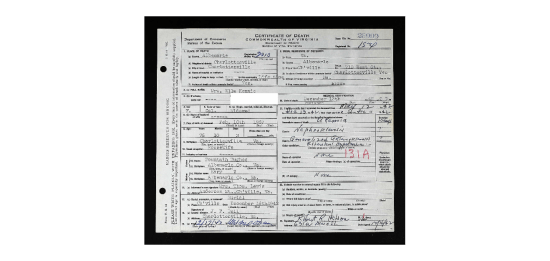
fountain hughes death certficate
fh1
fh2
fh3
fh4
fh5
 

Hey Folks! This blog post is for you. I hope you’re having a great day and are ready to learn something about and listen to the voices of African American men who worked to build this country up and have never been shown any appreciation.

 Throughout history, thousands of men and women desire to be talked about and shown some acknowledgment. People like Martin Luther King Jr., Rosa Parks, and Barack Obama have been written about and talked about for some time now.

However, You will not know these names, but this post will educate you on our black men who are worthy of being the topics of discussion. It is a painful history and matter; nonetheless, it is my topic today.

 I hope that this blog will enlighten you as well as be entertaining. 

The first person I will showcase is :

FOUNTAIN HUGHESFountain Hughes, Age 101

Fountain Hughes, circa 1952. Photograph courtesy of The Jeffersonian newspaper, Towson, Maryland.

Subsequently, Fountain Hughes lived a long time after gaining his freedom after the Civil War. According to the Census Reports, Mr. Hughes was 71 years old and married, living in Baltimore, Maryland, in the 1920 census.

And then, in the 1930 census, he was 81 years old, living at 3201 Wyler Ave, Baltimore, MD; 1940 census, he was 91 years 0ld and working as a Gardner. His workweek was 40 hours, and he earned $400.00 a month.

In any case, Fountain Hughes died at the age of 109 years old in 1957. The obituary was dated July 5, 1957. He was born in Charlottesville, Virginia.

He left behind a daughter named Shallie Addison.

Fountain Hughes, Interview.

“You wasn’t no more than a dog to some of them in them days. You wasn’t treated as good as they treat dogs now. But still I didn’t like to talk about it. Because it makes, makes people feel bad you know. Uh, I, I could say a whole lot I don’t like to . And I won’t say a whole lot more.”

Listen to the rest of the narrative…


I want to say thanks so much for reading my blog post intro paragraph today.

Thanks again, and stay tuned because I’ll be talking about more African American history next week! Make sure to keep following my blog posts if you’re interested in learning more about these topics!


Source of Information:

Ancestry.Com census records

Library of Congress

Chicago citation style:

Norwood, Hermond, and Fountain Hughes. Interview with Fountain Hughes, Baltimore, Maryland. Baltimore, Maryland, November , 6, 1949. Pdf. https://www.loc.gov/item/afc1950037_afs09990a/.

APA citation style:

Norwood, H. & Hughes, F. (1949) Interview with Fountain Hughes, Baltimore, Maryland. Baltimore, Maryland, November , 6. [Pdf] Retrieved from the Library of Congress, https://www.loc.gov/item/afc1950037_afs09990a/.