
Black history is American history.
 Since Black History Month is here, I wanted to share something that I believe is significant.
Black history is American history. It’s the story of how Africans and their descendants fought and sacrificed for this country, even when they weren’t given the same rights and opportunities as other citizens.
That’s what I want to talk about.
Contrary to popular belief, black history is not just a celebration of Martin Luther King Jr., Rosa Parks, and Harriet Tubman.
It’s so much more than that.
To me, black history is an ongoing journey – a never-ending struggle for liberty and justice. And it’s something that we should all be proud of.
So let’s take a closer look at this critical part of American history – and learn why it matters today more than ever before.
We must look at the role of black history in our society. Too often, black history is relegated to a single month out of the year, and its impact is minimized.
There’s so much more to it than that! I’ll be sharing some of my favorite underrated black historical figures.
These people have made significant contributions to society but don’t get as much recognition as they deserve. Stay tuned for my top five picks!
Shirley Chisholm (1924 – 2005)
There is more diversity in Congress now than ever before. But, the same could not be said about Chisholm’s attempt to break the glass ceiling.
During the racial tensions of the late ’60s, she became the first Black woman elected to Congress to represent New York’s 12th District from 1969 to 1983.
Most importantly, in 1972, she became the first woman and person of color to run for the Democratic Party’s presidential nomination.
Her campaign slogan: “Unbought and Unbossed,” rings even louder today.
Bayard Rustin (1912 – 1987)
While Dr. King is usually credited for the March on Washington in August 1963, Bayard Rustin organized and strategized in the background.
He was viewed as a liability because he was gay and closely associated with communism.
Despite that, he was one of the brightest minds around. He served his community tirelessly, a tireless advocate for better wages and jobs.
Claudette Colvin (1939 – )
In 1955, Rosa Parks was not the first female to refuse to give up her seat on the bus in Montgomery, Alabama, and was subsequently arrested.
A courageous 15-year-old refused to give up her seat to a white woman on the bus and refused to move to the back of the bus before Rosa Parks.
Her name was Claudette Colvin.
She argued it was her constitutional right to remain seated near the middle of the bus and was subsequently arrested when she challenged the driver.
She was the first woman to be detained for her resistance. However, her story isn’t nearly as well-known as Parks’.
Annie Lee Cooper (1910 – 2010)
Ms. Cooper…a Selma, Alabama native, played a crucial part in the 1965 Selma Voting Rights Movement.
They praise her for punching Alabama Sheriff Jim Clark in the face.
She deserves to be celebrated for fighting to restore and protect voting rights.
Following the 2016 election, the fight for voting rights remains as critical as ever. Politicians across the country continue to engage in voter suppression.
Jane Bolin (1908 – 2007)
Jane Bolin was the first Black woman to attend Yale Law School in 1931. In 1939, she became the first Black female judge in the United States, where she served for 10 years.
Her significant contribution throughout her career was working with private employers to hire people based on their skills instead of discriminating against them based on race.
Marsha P. Johnson (1945 – 1992)
Marsha Johnson was a Black trans woman and leading advocate for the LGBTQ movement.
Besides founding STAR, a homeless youth housing organization, Johnson was also a member of the Gay Liberation Front.
Rose Marie McCoy (1922 – 2015)
Although she couldn’t make her own voice heard in an industry dominated by white males, Rose McCoy could make her mark through her pen.
In the 1950s, McCoy wrote and produced some of the biggest pop songs.
Despite the failure of “After All” and “Gabbin’ Blues” to chart at all, music labels contacted her to write for others, including hit singles for Big Maybelle, Elvis Presley, and Big Joe Turner.
You will now remember the name of the African American woman who wrote Presley’s song “Trying to Get You” now that you know its author.
Every day, we honor America’s past. But what about the present? What does America look like right now?
It’s a reminder that every person has a unique and powerful story to tell. We are all connected by our shared experience as Americans.
This Black History Month, learn more about the phenomenal individuals who helped shape our nation.
What you discover may surprise you!
Finally, don’t forget to come back for more stories about people who played a significant role in this country’s defining moments.
https://jusmeetwo.com/african-american-history-facts/https://jusmeetwo.com/african-american-history-facts/
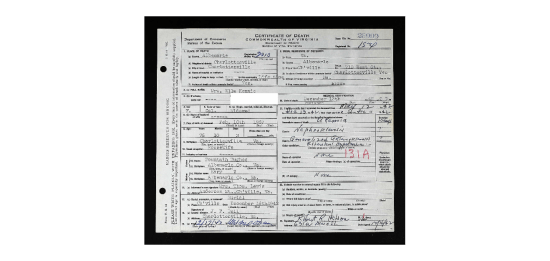


 Fountain Hughes, Age 101